Choosing the Right Product
Demand, competition, pricing and product economics need to be evaluated before committing to inventory.
Route Revenue coordinates product research, manufacturer sourcing, samples, packaging, production, quality-control workflows, logistics and Amazon launch support through one structured private-label process.
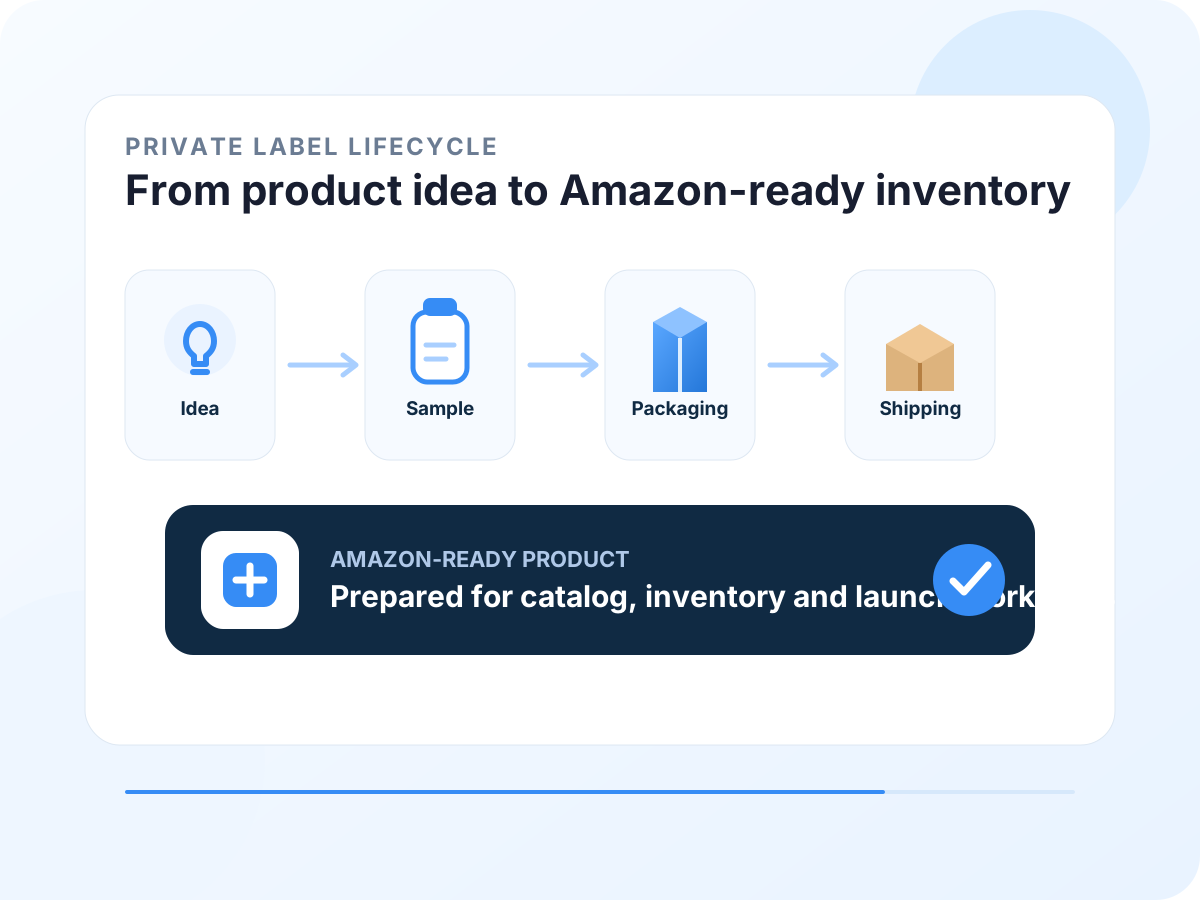
A private-label launch involves product decisions, supplier communication, sampling, packaging, production, logistics and Amazon requirements before inventory reaches the customer.
Demand, competition, pricing and product economics need to be evaluated before committing to inventory.
Manufacturers can differ significantly in capabilities, MOQs, pricing, lead times, quality systems and communication.
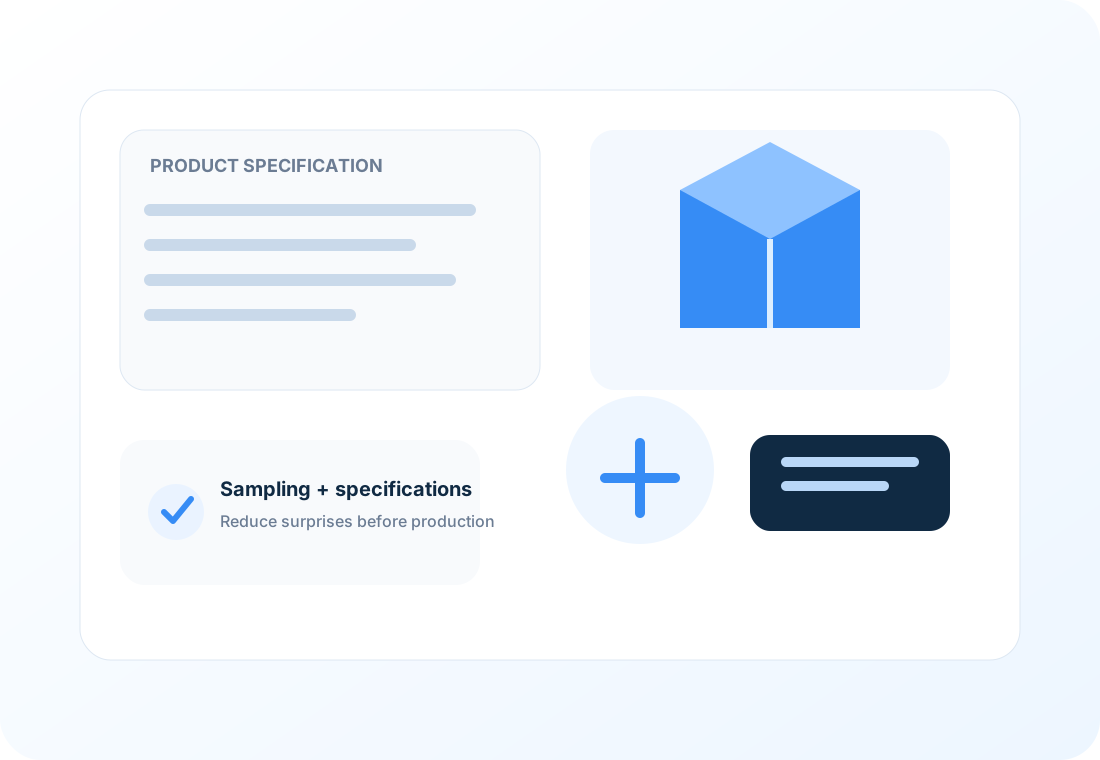
Clear specifications and structured sample reviews help reduce production surprises.
Packaging must align with the product, customer experience, logistics and marketplace requirements.
An approved sample is only one step. Production still requires clearly defined requirements and appropriate quality checks.
Freight, prep, labeling, cartons and FBA requirements create another operational layer.
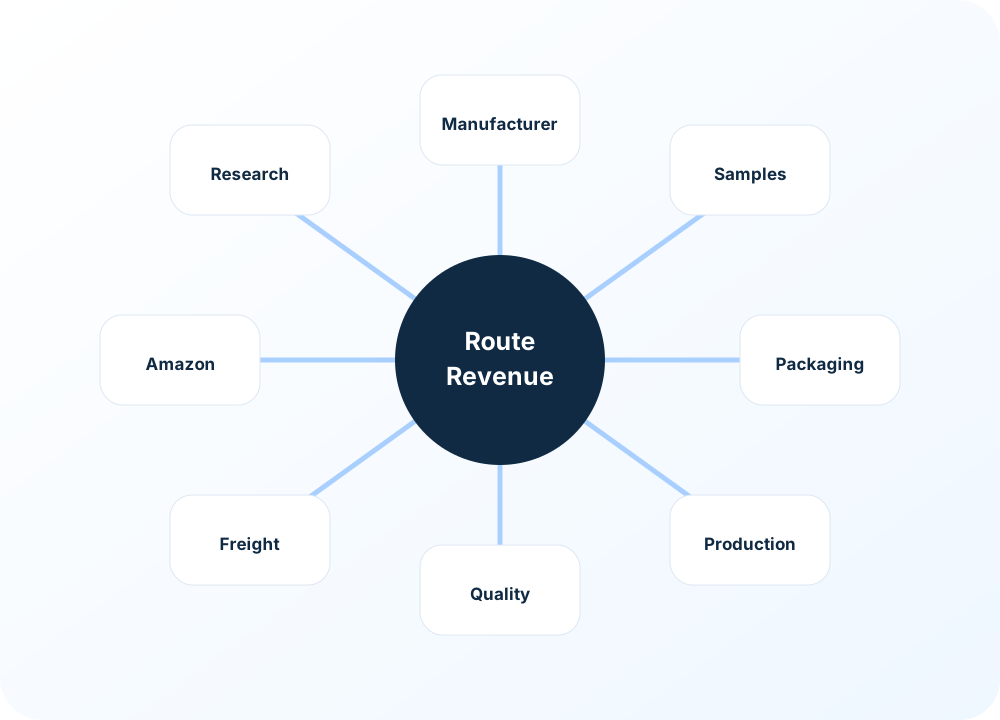
Instead of coordinating product researchers, sourcing agents, manufacturers, packaging vendors, inspectors, freight providers and Amazon specialists independently, Route Revenue brings the process together under one structured project roadmap.
A structured eight-stage roadmap designed to keep research, sourcing, product development and marketplace preparation connected.
Review category demand, competitive conditions, pricing, differentiation opportunities and preliminary product economics.
Define product requirements, features, packaging expectations, target-cost considerations and manufacturer criteria.
Identify and compare potential manufacturers based on capability, MOQ, pricing, lead time, communication and available documentation.
Coordinate samples, organize feedback and manage approved revisions before production authorization.
Coordinate branding, labels, packaging requirements and production-ready files included within the approved project scope.
Coordinate approved production milestones and appropriate quality-control or inspection steps based on the engagement.
Coordinate shipment planning, prep requirements, labeling and inventory movement toward Amazon fulfillment.
Support listing readiness, content, inventory setup and launch activities included within the agreed service scope.
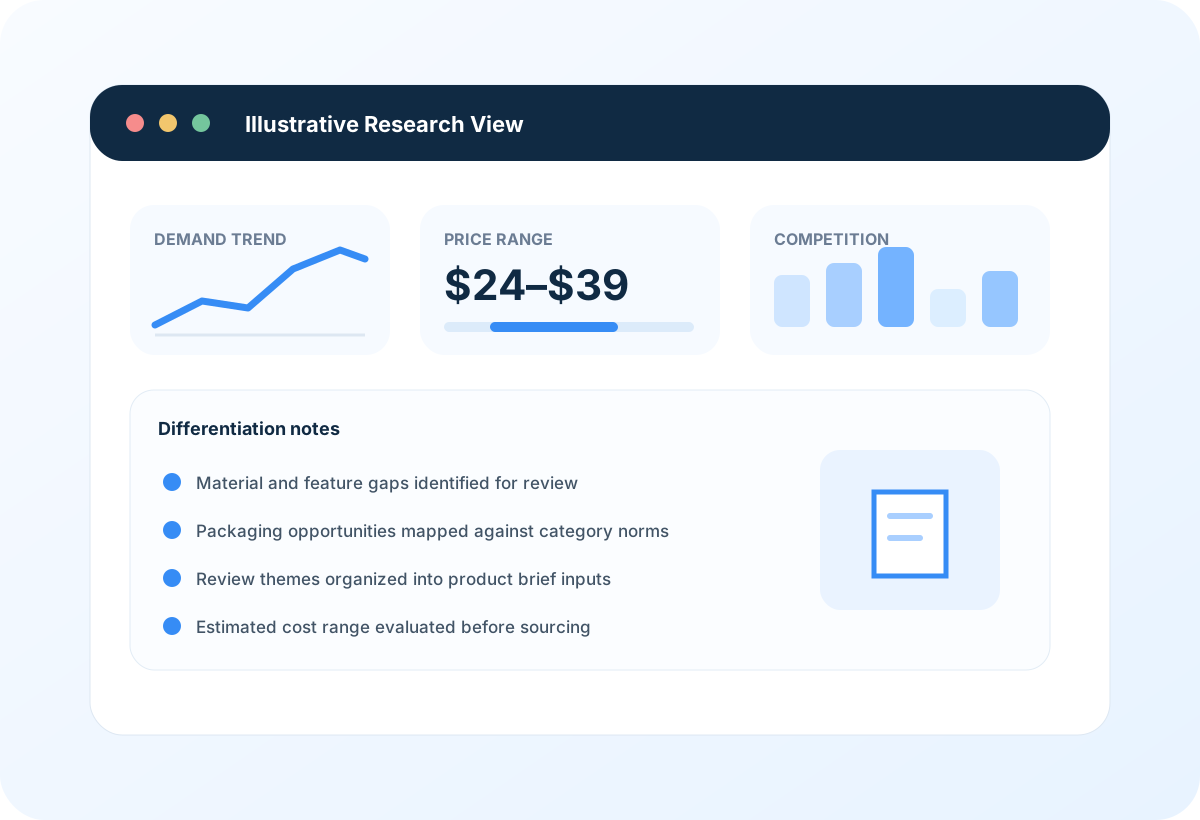
Private-label decisions should begin with structured research rather than assumptions. Route Revenue evaluates market inputs relevant to the project before sourcing begins.
Price alone does not determine whether a manufacturer is a good fit. Potential suppliers should be evaluated across multiple operational factors before a production decision is made.
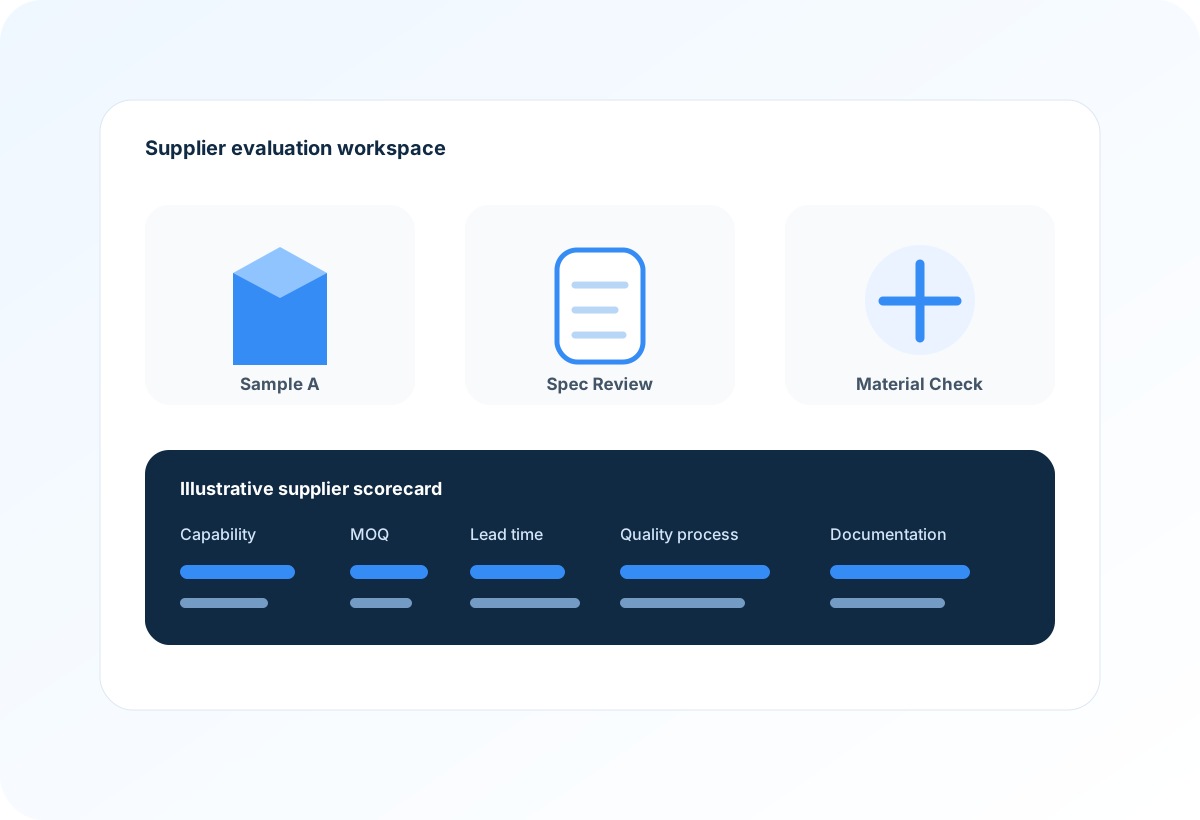
| Criteria | Manufacturer A | Manufacturer B | Manufacturer C |
|---|---|---|---|
| Capability | Good fit | Partial fit | Good fit |
| MOQ | Moderate | Lower | Higher |
| Unit Quote | Mid-range | Lower | Mid-range |
| Sample Cost | Quoted | Quoted | Quoted |
| Tooling | To review | Included | Separate |
| Lead Time | Standard | Shorter | Longer |
| Quality Process | Documented | Basic | Documented |
| Packaging Options | Flexible | Limited | Flexible |
| Communication | Responsive | Responsive | To verify |
| Documentation | Available | Partial | Available |
Illustrative data only. Actual supplier comparisons depend on the project.
Samples provide an opportunity to compare the product against agreed requirements before production. Route Revenue coordinates the communication and review workflow included in the engagement.
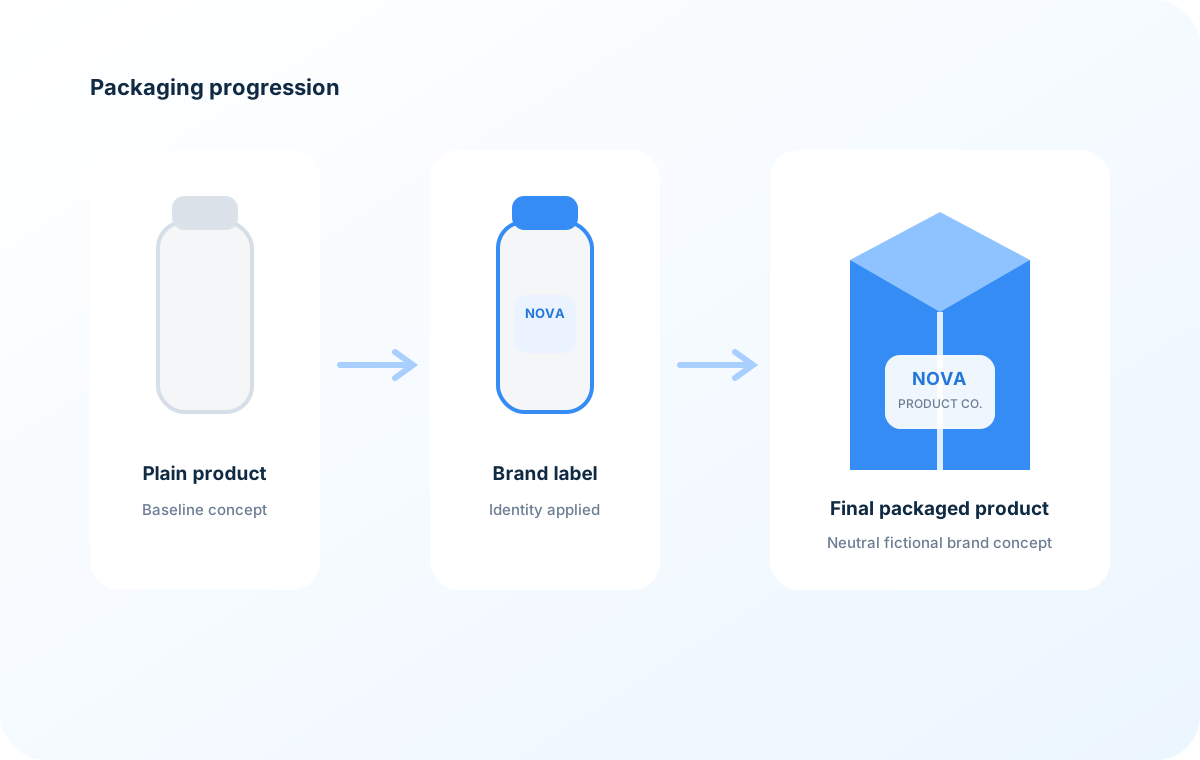
The product and its packaging should communicate a consistent brand while remaining practical for production, shipping and marketplace requirements.
Specific creative and packaging deliverables depend on the agreed project scope.
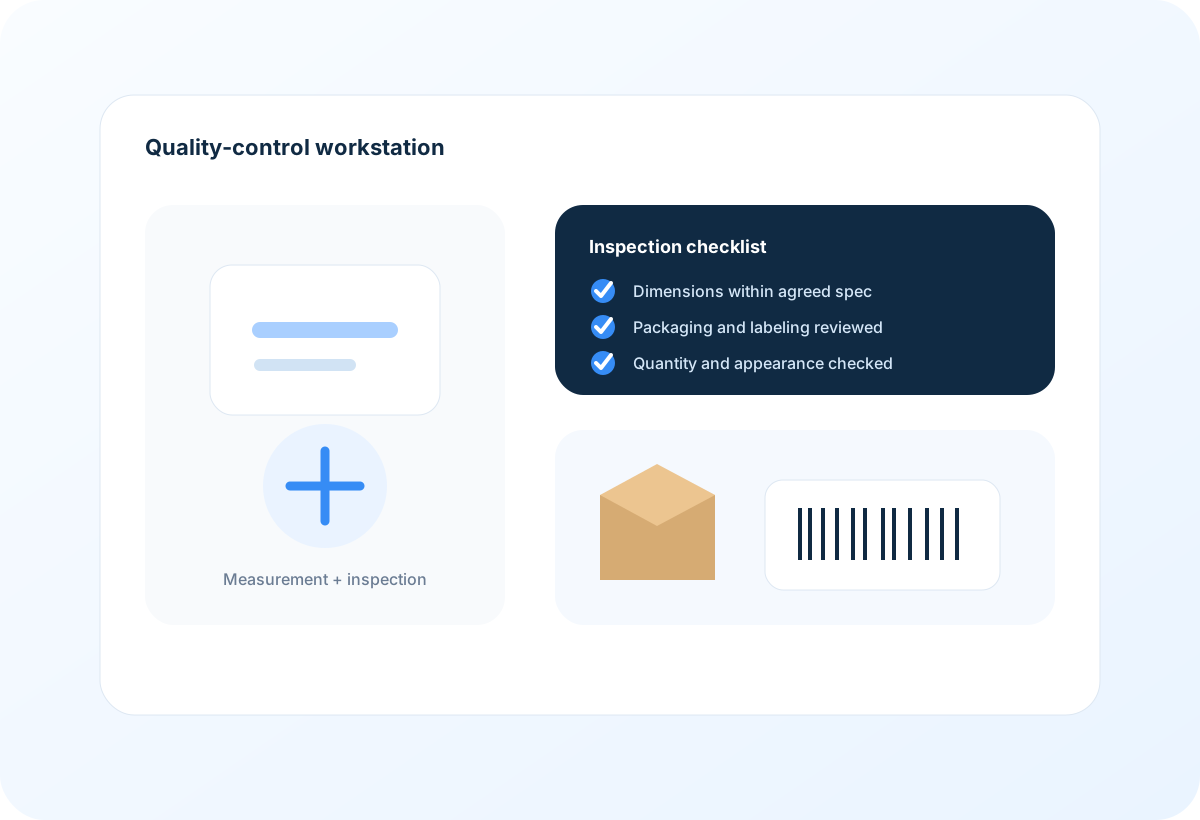
Production requires clear specifications and appropriate verification before inventory moves forward.
Use the approved reference as the basis for production expectations.
Document agreed requirements before production authorization.
Coordinate milestones included in the engagement.
Arrange appropriate checks based on product and scope.
Move forward based on documented approvals and release requirements.
The logistics plan depends on the product, manufacturing origin, shipment size and fulfillment requirements. Route Revenue coordinates the approved logistics workflow included in the project scope.


Once the physical product is ready, the Amazon side of the project still requires catalog, inventory and launch preparation.
| Project Step | Managing It Yourself | Route Revenue Workflow |
|---|---|---|
| Product research | Coordinate independently | Coordinated within project |
| Manufacturer sourcing | Search independently | Manufacturer sourcing support |
| Quotes | Compare manually | Structured comparison |
| Samples | Manage communication | Coordinated workflow |
| Packaging | Source separately | Coordinated within scope |
| QC | Arrange independently | QC coordination |
| Freight | Source independently | Logistics coordination |
| Amazon launch | Coordinate independently | Amazon launch support |
Rather than publishing unverified performance claims, this page focuses on the operating milestones a private-label project can move through.
Project steps, responsibilities and approvals are organized before major production decisions move forward.
Product, sample and production decisions remain subject to client approval and the applicable service agreement.
Research, sourcing, sampling, production coordination, logistics and Amazon launch are managed as connected workstreams.
We review your product stage, category, objectives and current requirements.
We define responsibilities, services, deliverables and the project sequence.
The approved research, sourcing, sample and development work begins.
The project moves through production, logistics and Amazon launch milestones included in scope.
Route Revenue provides private-label development, sourcing and project-coordination services. Manufacturing is performed by approved third-party manufacturers unless otherwise explicitly stated in the applicable service agreement.
Yes. The process can begin with research and project scoping to determine whether the concept should move into supplier sourcing and sample development.
Manufacturer sourcing can be included in the service scope. Potential suppliers may be compared based on capabilities, MOQ, pricing, lead times, communication and other relevant requirements.
MOQ means minimum order quantity. Manufacturers may set minimum production quantities based on the product, materials, customization and packaging requirements.
Costs vary significantly by product complexity, materials, samples, tooling, MOQ, packaging, inspections and logistics. A project review is needed before meaningful estimates can be discussed.
Timelines depend on product complexity, revisions, samples, factory capacity, production requirements, compliance and logistics. Route Revenue does not promise a universal launch timeline.
Where sampling is part of the project, sample review and approval takes place before production authorization.
The client retains ownership of their brand, Amazon Seller account, inventory and product rights according to the applicable agreements.
No. Ecommerce performance depends on demand, competition, pricing, product quality, inventory, Amazon policies and market conditions. Route Revenue does not guarantee specific financial outcomes.
Amazon-related launch and account services may be included depending on the agreed project scope.
Tell us where you are in the process. Our team will review your project requirements and discuss the next practical step.